

A coalition of NGOs, civil society groups, and youth organizations under the Renewable Energy for Communities Coalition (RE4CC) — led by 350 Ghana Reducing Our Carbon (350 G-ROC) — has called on the Government of Ghana to prioritize renewable energy in the country’s national energy policy.
The coalition believes that a decisive shift toward renewable energy will secure livelihoods, protect the environment, and build a resilient future for generations to come.
Petition to the Minister of State in Charge of Climate Change and Sustainability
As part of their ongoing advocacy for climate justice, the coalition presented a petition to the Minister of State in charge of Climate Change and Sustainability during the “Draw the Line” March held today in Accra. The petition calls on government to accelerate efforts toward a just and equitable renewable energy transition that benefits all Ghanaians.
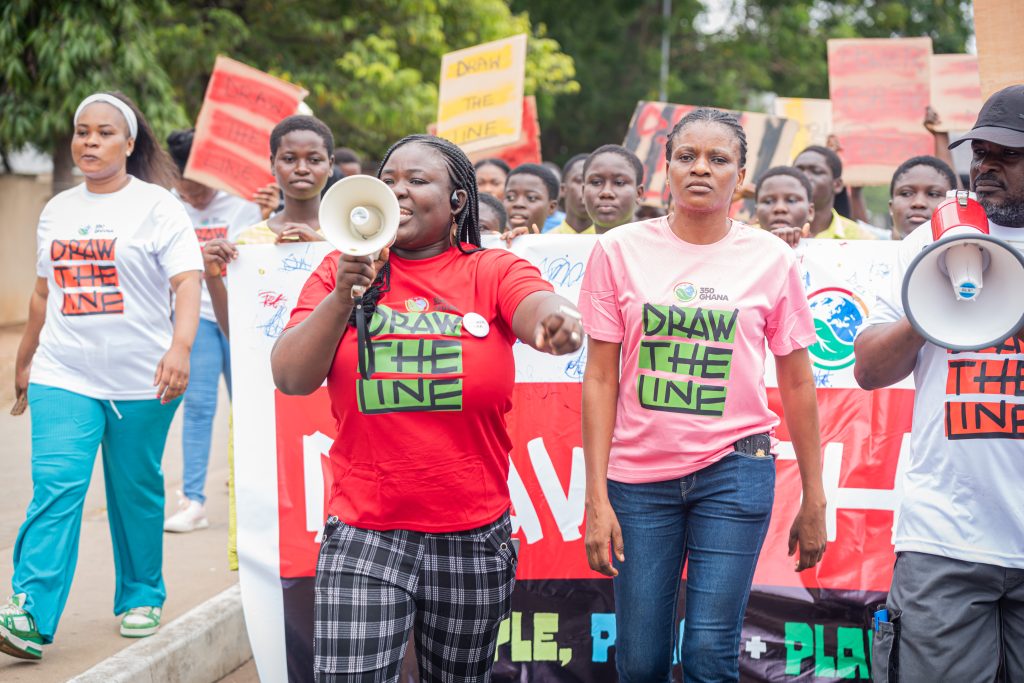
The march, themed “Just Transition – for Life, for People, and for the Planet,” brought together citizens, youth groups, faith leaders, and civil society organizations. Participants marched from Children’s Park to Independence Square, demonstrating collective resolve to demand climate action and a sustainable energy future.
Climate Crisis and Energy Inequality in Ghana
Communities across Ghana are already grappling with the consequences of climate change — from unpredictable rainfall patterns affecting agriculture to rising sea levels displacing coastal residents.
Despite Ghana’s vast potential for solar and wind power, only a small fraction of these resources has been tapped. Meanwhile, continued reliance on fossil fuels and plans to expand gas infrastructure threaten to deepen environmental damage, increase climate vulnerability, and compromise economic stability.
Energy inequality also persists, with many communities still lacking reliable and affordable electricity. At the same time, illegal mining and pollution continue to destroy ecosystems and harm public health.
A Call for a Just Energy Transition
The RE4CC, led by 350 G-ROC, is demanding urgent reforms to ensure that Ghana transitions toward a renewable energy-driven economy that protects people and the planet.
Convener of the coalition, Portia Adu-Mensah, emphasized the need for stronger government commitment to achieving Ghana’s 10% renewable energy target by 2030.
She urged policymakers to redirect public funding and policy support away from fossil fuel projects and channel investments into expanding Ghana’s renewable energy capacity.
The coalition advocates for decentralized, community-based renewable energy systems that can generate local employment, empower communities, and provide clean, affordable energy to areas in need.
Inclusion, Transparency, and Justice
Beyond energy access, the coalition is calling for a fair, transparent, and inclusive energy transition process — one that prioritizes frontline communities, protects workers’ rights, and ensures that the benefits of renewable energy are shared equitably across all regions of Ghana.
The “Draw the Line” March marks a major step in Ghana’s renewable energy movement — a clear statement from the people that the time for decisive climate action is now.
As the petition reaches the government, the message from 350 G-ROC and its partners in the Renewable Energy for Communities Coalition is unambiguous:
“It’s time for Ghana to draw the line on fossil fuels and invest in renewable energy — for life, for people, and for the planet.”

