
As evening approaches in Jonahkrom, a quiet farming community in the Amansie Central District of the Ashanti Region, life used to slow down quickly. Once the sun went down, darkness took over. Students packed away their books, and phones went off because there was nowhere nearby to charge them.
For as long as anyone can remember, Jonahkrom has never been connected to the national electricity grid. The community’s location—accessible mainly by a narrow path shaped over time by motorbikes and tricycles—meant development often passed them by.
That reality has started to change.
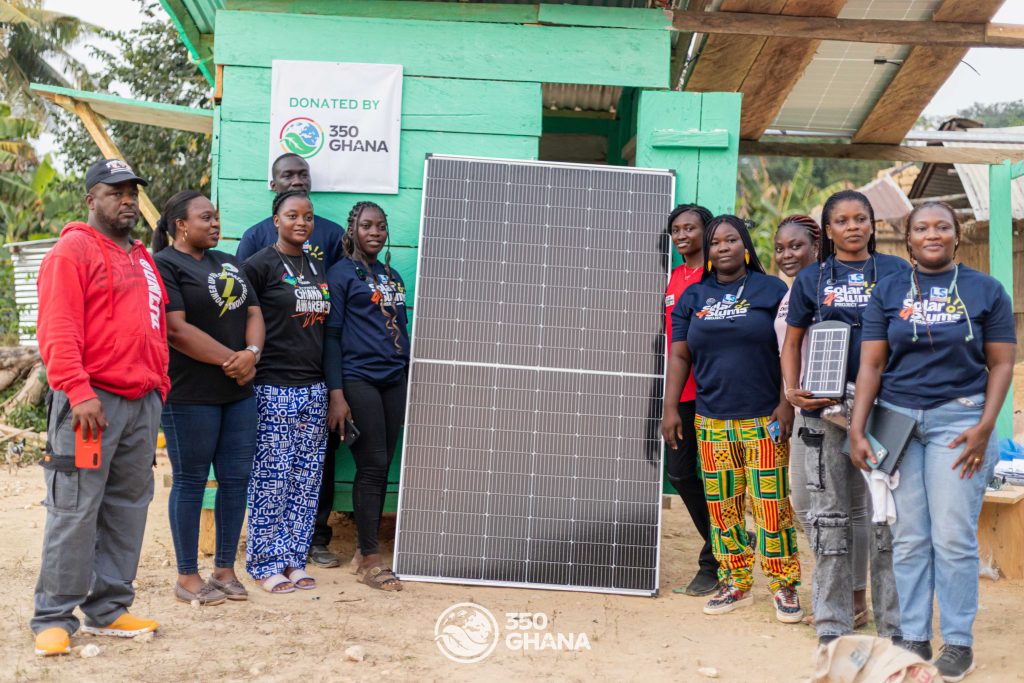
Through REPower Ghana, a renewable energy and energy justice project implemented by 350 Ghana, a solar-powered kiosk has been constructed in Jonahkrom. The kiosk generates 2 kilowatts of power, enough to run a television and allow community members to charge their phones right in the village.
For the people of Jonahkrom, this is more than just electricity.
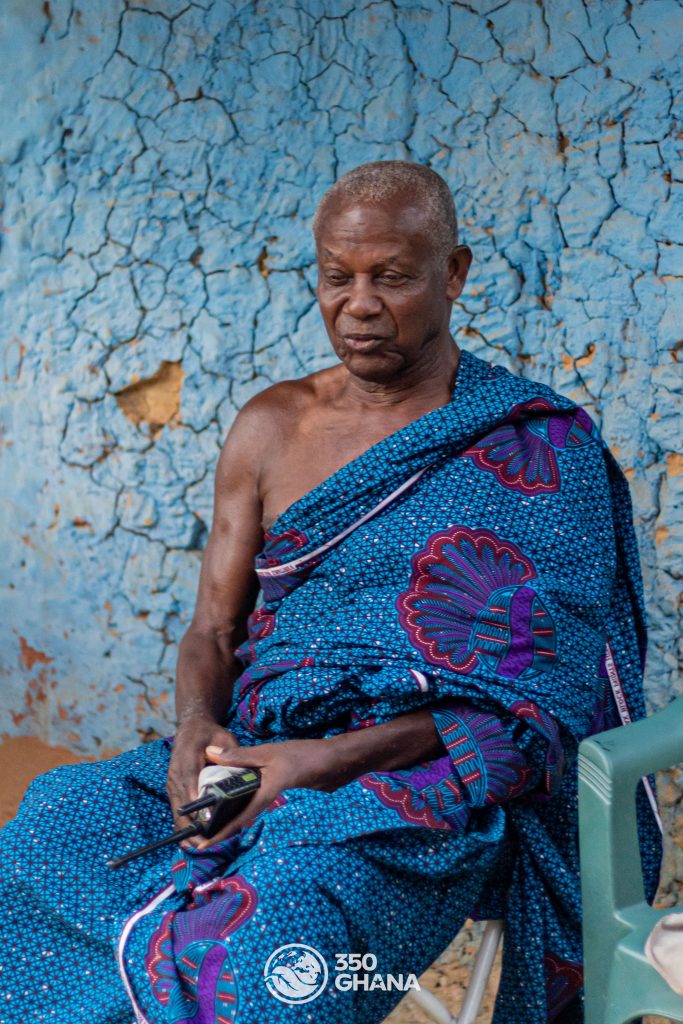
“This is a turning point for our community,” said Nana Samuel Addai, the Odikro of Jonahkrom. As he thanked 350 Ghana for the support under the REPower Ghana project, he explained that the community had lived without electricity for decades. For the first time, residents are experiencing what access to power truly means—not just light, but connection, information, and opportunity.
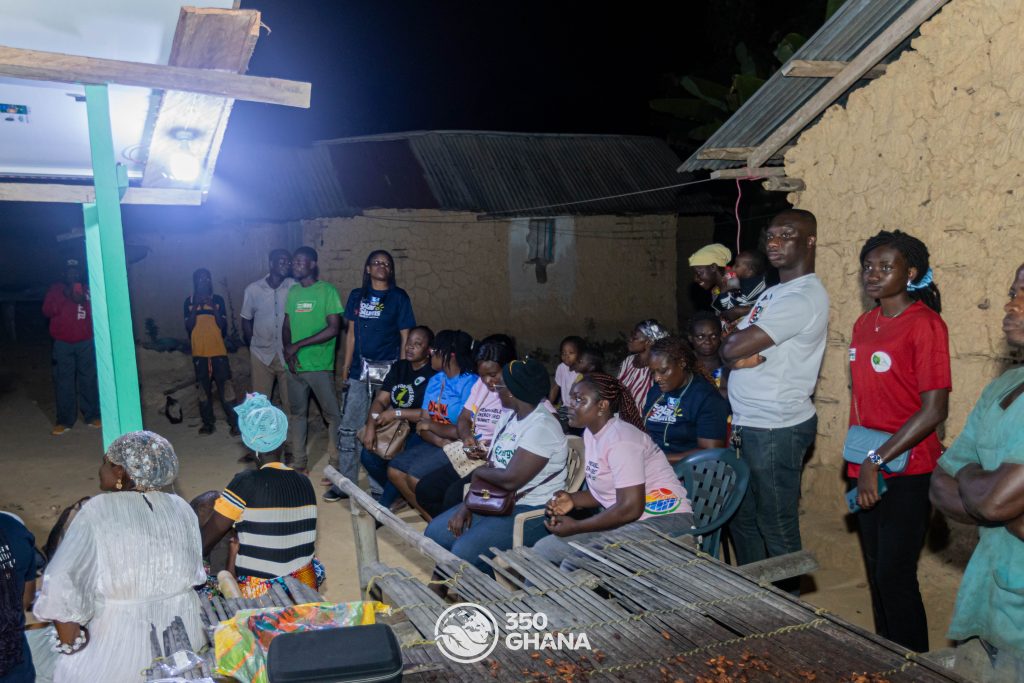
The impact of REPower Ghana goes beyond the kiosk itself. Five solar-powered streetlights have also been installed across the community. At night, paths that were once dark are now visible. Small traders can now sell at night, and community members feel safer moving around after sunset.
To make the moment even more special for the community, Hon. Simon Kwadwo Antwi, Assembly Member for the Mile 9 Electoral Area, donated a 32-inch television together with a MultiTV satellite decoder and dish. The gesture brought excitement to the community, turning the solar kiosk into a shared evening space where residents can gather, watch television, and enjoy the benefits of electricity together.
For students, the change is especially important. With proper lighting in the evening, children can now study without relying on torches or lanterns. Parents say this simple improvement is already helping their children focus more on schoolwork.
Residents feel the impact in everyday ways.
“I used to go all the way to Mile 9 just to charge my phone,” said Beatrice Boateng, a resident of Jonahkrom. “Now I can charge it right here in my own community. It saves me time and transport money.”
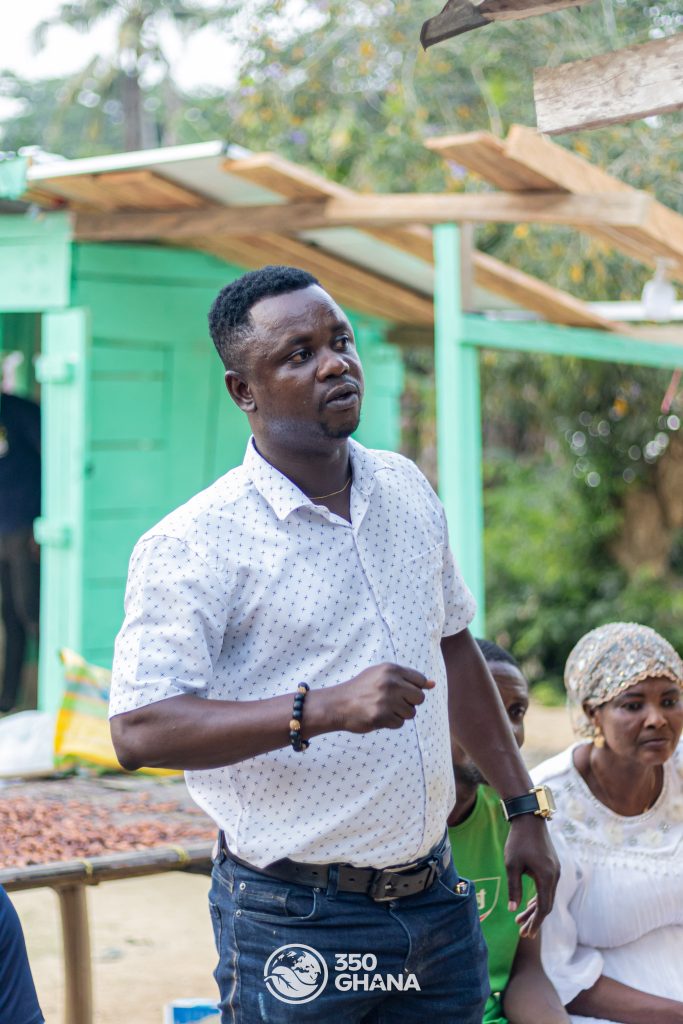
Local leadership has also welcomed the initiative. Hon. Simon Kwadwo Antwi expressed his joy at seeing Jonahkrom benefit from a project that directly responds to the needs of rural communities, noting that access to energy is key to development.
According to Louisa Amoah, Assistant Project Lead for REPower Ghana, Jonahkrom was selected intentionally.
“The community feels forgotten because of its location,” she explained. “The road leading here was created mainly by the movement of motorbikes and tricycles. That told us a lot. Through REPower Ghana, we wanted to make sure communities like Jonahkrom are not left out of the energy transition.”
Today, the solar kiosk stands in Jonahkrom as more than just a structure. It represents progress, dignity, and new possibilities—allowing people to study, trade, stay connected, and now even gather together after dark.
For Jonahkrom, light is no longer something to wait for. Through REPower Ghana, it has finally arrived.
