
Ghana has steadily positioned itself as a leader in West Africa’s transition toward renewable energy and climate stewardship. Over the past decade, the government, civil society, youth organisations, and international partners have collaborated to create policies, programmes, and community-centred projects that accelerate the adoption of clean energy technologies and reduce carbon emissions across the country.
National Vision and Policy Framework
As part of its climate commitments under the Paris Agreement, Ghana has outlined ambitious national targets to increase the share of renewable energy in its national energy mix. The National Clean Energy Programme (NCEP) alone plans to develop thousands of rooftop solar installations and strengthen clean energy infrastructure across homes, businesses, and institutions actions designed to cut emissions and bolster energy security while creating jobs and stimulating local innovation. 
In addition to rooftop initiatives, Ghana aims to achieve at least 10 % renewable energy penetration in its overall energy mix by 2030, driven by solar, wind, and other renewable sources. This goal is part of the broader Energy Transition Framework, which also lays the groundwork for net-zero emissions by 2070. 
Government efforts are further bolstered by programmes such as the deployment of 12,000 net-metered solar systems to empower households and small businesses with clean, cost-saving electricity. 

Community-Level Implementation and Innovation
Beyond national policy, Ghana’s renewable energy transformation is tangible at the grassroots level. Solar projects across the country from solar PV mini-grids in rural Ashanti communities to solar-powered boreholes and charging centres in the Upper East and West regions illustrate how clean energy can enhance livelihoods, improve service delivery, and expand access to reliable electricity. 
Civil society has played an instrumental role in deepening this transition. Organisations like 350 Ghana Reducing Our Carbon (350 G-ROC) have mobilised youth and communities to advocate for renewable energy and implement practical solutions tailored to local needs. Their work spans awareness campaigns, community training, and direct clean energy interventions that complement national efforts. 
350 G-ROC and the Solar Kiosk Donation at Jonahkrom
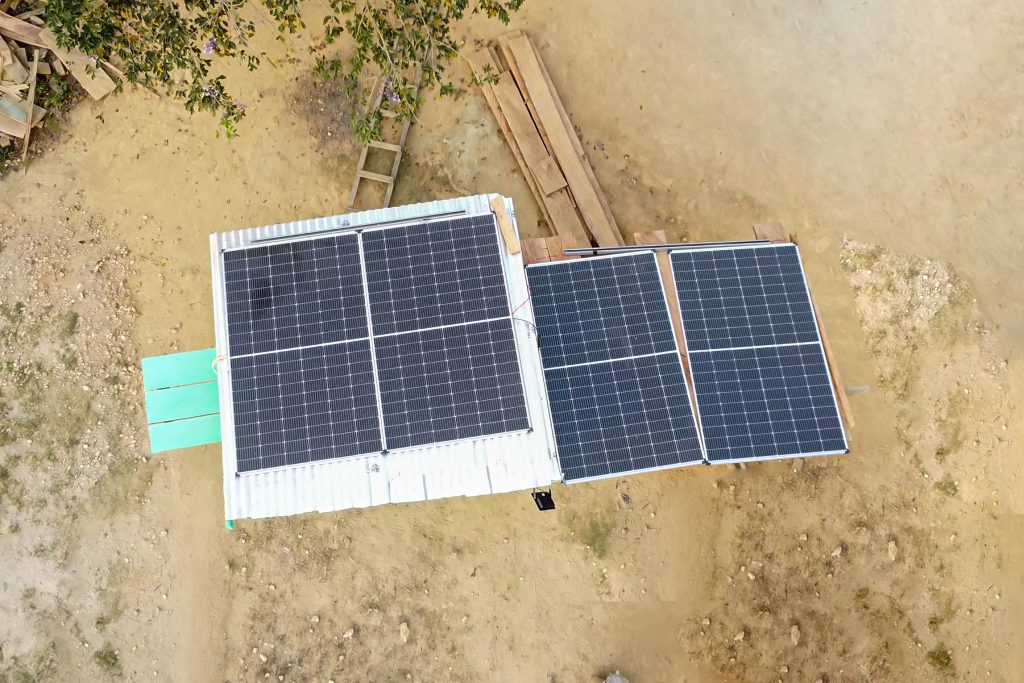
One of the most inspiring examples of grassroots impact is the recent donation of a 4 module 500W paneled solar kiosk to the community of Jonahkrom by 350 G-ROC. This initiative reflects both Ghana’s broader commitment to renewable energy and the power of community-driven action to deliver concrete benefits at the local level.
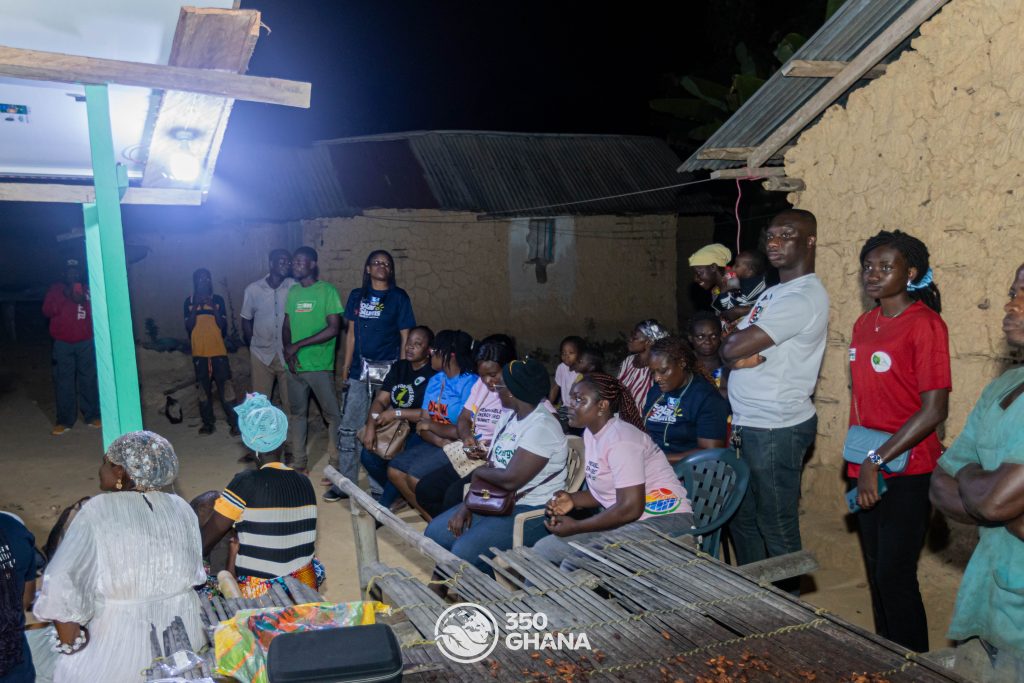
The solar kiosk equipped with photovoltaic panels and charging facilities serves as a hub where community members can access clean, reliable energy for essential needs such as charging phones, powering lights, and supporting small businesses. This is particularly vital in areas where grid access is limited or intermittent, allowing families to save on fuel costs, children to study after sunset, and entrepreneurs to extend their productive hours.
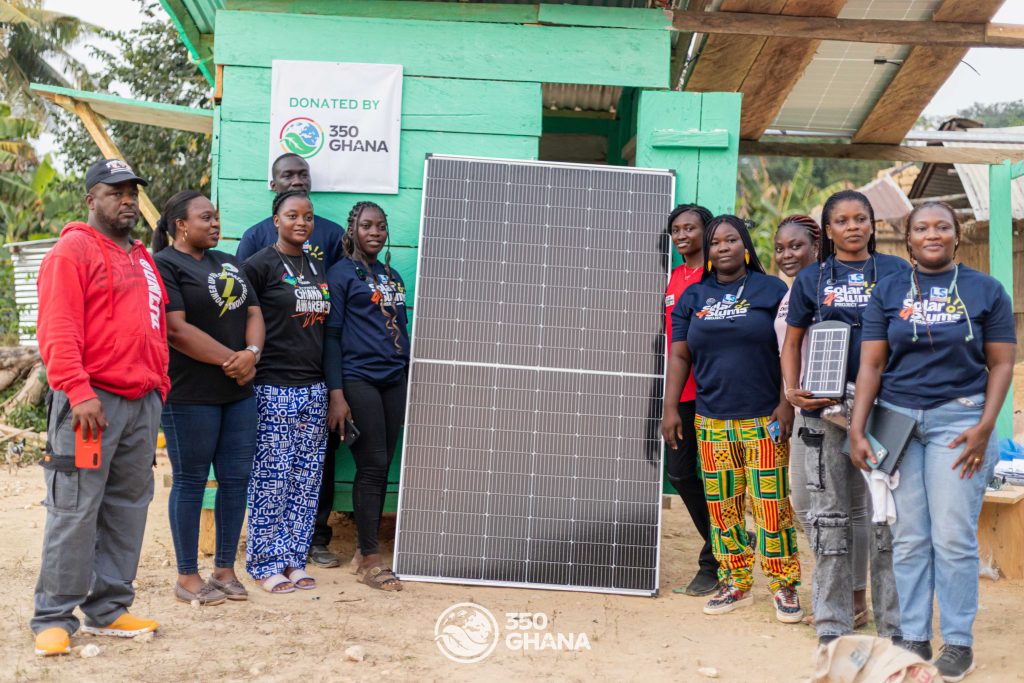
While specific impact data for the Jonahkrom donation is still emerging, similar solar kiosk models have shown that clean energy access can meaningfully improve daily life, reduce reliance on expensive and polluting alternatives (like kerosene lanterns), and enhance economic opportunities for rural residents. 
Harnessing Positive Impact
The positive effects of Ghana’s renewable energy push and efforts like the Jonahkrom solar kiosk can be viewed across several dimensions:
• Environmental Benefits: By replacing fossil fuel-dependent lighting and power sources, solar solutions help lower carbon emissions and protect air quality.
• Economic Opportunity: Access to electricity enables small enterprises, boosts productivity, and reduces household energy expenditures.
• Social Well-Being: Clean, reliable energy supports education, health outcomes, and communication especially in rural communities where grid infrastructure is absent or weak.
Looking Ahead
As Ghana pursues its clean energy goals, the synergy between national strategies and community action will be crucial. Donations like the solar kiosk at Jonahkrom, championed by 350 G-ROC and its partners, showcase how renewable energy can be both a climate solution and a driver of inclusive development.
This dual focus on policy and practice, ambition and action is at the heart of Ghana’s renewable energy journey, lighting the way toward a more sustainable, equitable, and prosperous future for all communities.
Arthur: John Agyekum Kuffour , Finance Director, 350 Ghana Reducing Our Carbon

