

350 Ghana has successfully conducted an educational outreach at St. Joseph School in the Obuasi East Municipality as part of its Renewable Energy (RE) for Schools Project, aimed at strengthening pupils’ understanding of renewable energy, climate change, energy efficiency, health, and environmental responsibility.
The outreach formed part of the organisation’s broader efforts to promote climate literacy and encourage sustainable practices among young people. Through interactive sessions, pupils were introduced to practical concepts that link clean energy, environmental protection, and everyday life.
The programme was officially opened by the RE for Schools Project Team Lead, Miss Patience Enyah, who set the tone with a foundational question—“What is renewable energy?” The participatory approach encouraged pupils to actively engage in the discussion, share their ideas, and build on their existing knowledge.
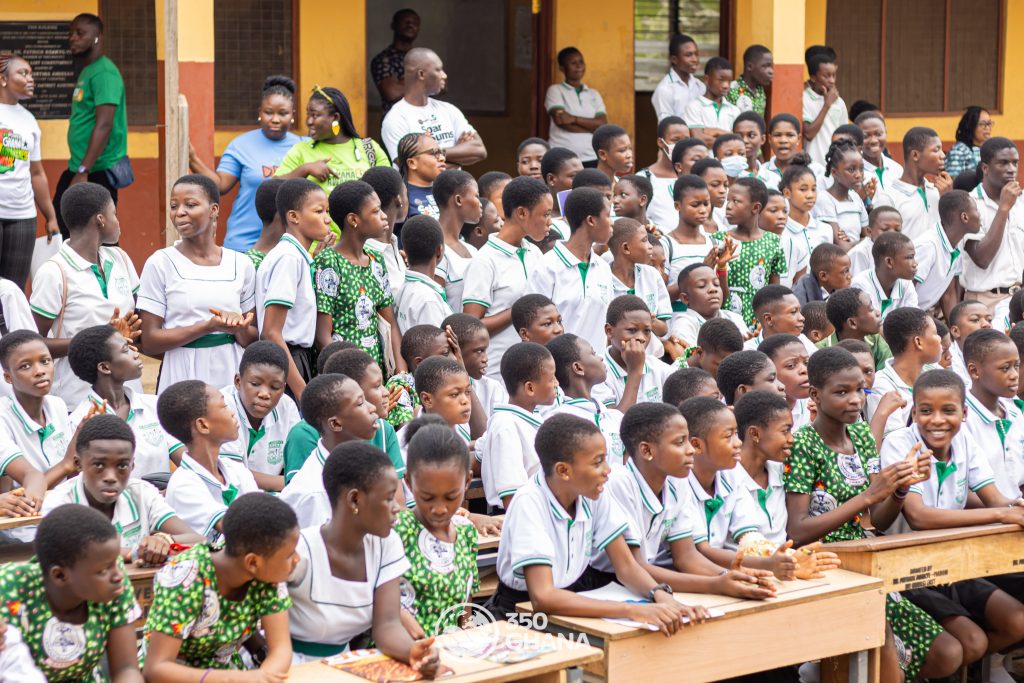
Members of the 350 Ghana team subsequently took pupils through lessons on renewable energy, with particular emphasis on solar energy as a clean and sustainable alternative to fossil fuels. The facilitators explained how solar energy reduces pollution, protects the environment, and supports long-term development.
A separate session focused on energy efficiency, where pupils were guided to understand the importance of using energy wisely. Through follow-up questions, facilitators explored the types of energy commonly used in pupils’ homes—including electricity, charcoal, gas, and firewood—and discussed everyday habits such as switching off lights and unplugging unused appliances. The discussion helped pupils reflect on their personal energy use and recognise simple actions they could take to reduce waste. Energy efficiency, according to the International Energy Agency, remains one of the most cost-effective ways to reduce greenhouse gas emissions.
The session on climate change highlighted its growing impact on agriculture and livelihoods. Facilitators discussed challenges such as irregular rainfall, prolonged droughts, floods, and rising temperatures, helping pupils understand how these changes threaten food security and farming communities, in line with findings by the Intergovernmental Panel on Climate Change (IPCC).
Health and environmental issues were also addressed by Dr Christella Oppong-Amankwah, a medical doctor with 350 Ghana, who educated pupils on the health risks associated with environmental pollution and unsafe energy use. She explained how smoke from firewood and charcoal can cause respiratory illnesses and poor air quality, reinforcing the close link between environmental protection and human health, as highlighted by the World Health Organization (WHO).
To reinforce learning, pupils were encouraged to express key lessons through artwork. Their drawings featured solar panels, clean environments, healthy farms, green trees, and safe communities. The activity demonstrated pupils’ understanding of renewable energy and climate action while showcasing creativity as an effective educational tool.
The outreach concluded with brief but inspiring remarks from Mrs Portia Adu-Mensah, Team Lead of 350 Ghana, who urged pupils to apply what they had learned and become ambassadors for clean energy and environmental protection in their homes and communities.
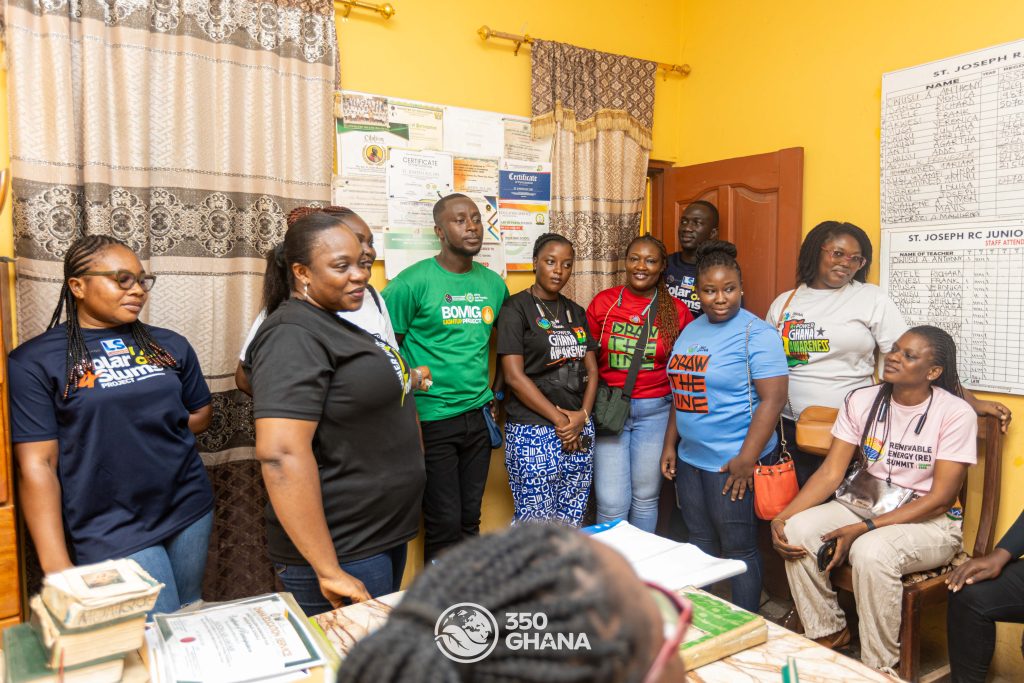
As a symbol of commitment to sustainable education, the 350 Ghana team presented a solar lamp to the headmistress of St. Joseph School. The gesture reinforced the project’s message on the practical benefits of renewable energy and the importance of supporting schools with clean and reliable energy solutions.

